
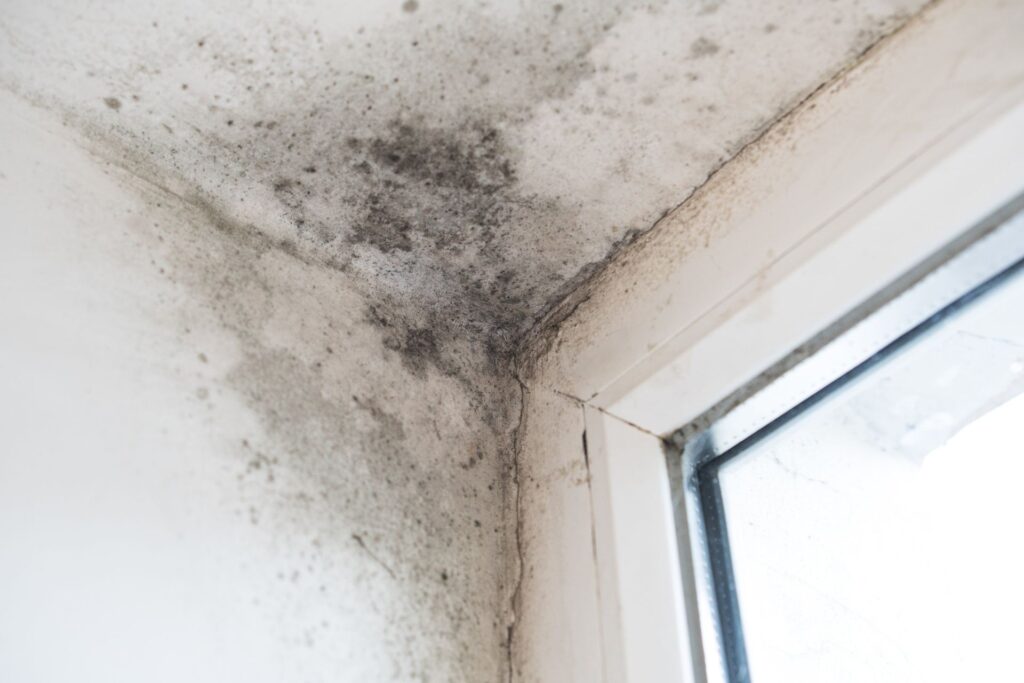
Mould appears in many New Zealand workplaces without much warning. It rarely arrives as a major incident. More often it is noticed gradually: an odour that lingers, a ceiling tile that looks slightly marked, a room that feels damp despite regular cleaning. Because those signs seem minor, the response is often limited to wiping or repainting. In most cases, that response does not hold.
In commercial buildings, mould reflects how the space is functioning. It is tied to moisture, air movement, and the way materials in the building respond to both. When those factors are not balanced, mould establishes itself and persists. The consequences tend to extend beyond appearance, affecting indoor air quality, how the space is experienced by staff and visitors, and how the building is managed from a compliance perspective.
Mould is a living organism that develops where moisture is present. As a fungus, it spreads through microscopic spores that circulate in the air. These spores are already present in most indoor environments. They settle on surfaces continuously, usually without consequence. Growth begins when those surfaces remain damp for long enough.
In a commercial setting, this often involves materials that hold moisture without looking obviously wet. Ceiling tiles, wall linings, carpet underlay and timber elements can retain enough moisture to support growth while appearing dry to the touch. Once established, mould does not remain confined to one spot. Air movement and routine activity allow spores to move through the space, which is why small areas can reappear or extend over time.
Mould growth in workplaces is usually linked to conditions that build gradually rather than a single event. Moisture enters or forms within the building, and the conditions that would normally allow it to dissipate are not sufficient.
A slow roof leak above a ceiling can go unnoticed for some time. Condensation can form regularly where warm air meets a cooler surface, particularly overnight or during seasonal changes. Ventilation systems may be operating but not effectively removing humid air from enclosed spaces. Cleaning processes can also introduce moisture that does not fully dry in carpeted areas or poorly ventilated rooms.
In New Zealand, these factors are more pronounced due to climate. Humidity levels are often high enough to support mould growth without any obvious failure in the building. As a result, mould can develop in spaces that appear well maintained, simply because moisture is not leaving the environment as it should.
The effects of mould are not always immediate, which is one reason it is often underestimated. Over time, its presence changes how a space feels and functions.
Air quality is affected as mould releases spores into the environment. For some occupants this results in irritation or discomfort; for others it can aggravate existing conditions. The impact is more significant in settings where occupants are more sensitive, including schools and healthcare facilities.
There is also a practical effect on day-to-day operations. Persistent odours, visible staining, and recurring issues in the same areas tend to generate complaints and reduce confidence in the environment. Even when the issue is contained, it can alter how staff and visitors perceive the space.
From a regulatory standpoint, mould sits within the obligation to manage risks under the Health and Safety at Work Act 2015. Where a condition is known and capable of affecting occupants, it is expected to be addressed in a considered and proportionate way.
What is visible on the surface is often only part of the picture. By the time mould appears on a ceiling tile or wall, the conditions that support it have usually been present elsewhere.
Ceiling cavities are a common source, particularly where moisture is entering from above or forming through condensation. Wall linings can conceal growth that has developed out of sight. Carpeted areas can retain moisture below the surface, especially after cleaning or minor flooding. Ventilation systems can carry moisture through the building and allow mould to establish within ducting or units if conditions allow.
This is why addressing only what can be seen rarely resolves the issue. The underlying areas where moisture is present need to be understood and managed as part of the response.
Recurring mould is a familiar issue in many workplaces. The surface is treated, the area looks clear, and then the same pattern reappears.
This happens because the conditions that allowed mould to grow have not changed. Moisture remains present, even if it is not obvious. Spores continue to circulate in the air and settle again on the same surfaces. In some cases, the method used to clean the area can contribute to the spread by moving spores into adjacent spaces.
What is being addressed at surface level is only part of the problem. Without dealing with the environment that supports growth, the result is temporary.
Effective control starts with understanding how moisture is entering or forming within the building. That may involve identifying leaks, assessing ventilation, or looking at how temperature changes are affecting surfaces. Once those conditions are understood, they can be addressed in a way that reduces the likelihood of mould returning.
Treatment then needs to be applied in a controlled manner. This involves using appropriate products and allowing them to work as intended, while avoiding the spread of contamination to unaffected areas. The process is not limited to what is visible, as the surrounding environment will influence the outcome.
After treatment, the focus shifts to monitoring. Regular inspection allows conditions to be checked before mould becomes visible again, and maintenance can be adjusted accordingly. Over time, this approach stabilises the environment rather than reacting to repeated outbreaks.
Mould rarely appears without some form of early indication. Visible growth is the most obvious sign, but it is not the only one. Persistent odours, areas that feel consistently damp, or repeated issues in the same location suggest that moisture is not being managed effectively.
In environments where occupants may be more affected, smaller signs tend to warrant earlier attention. Investigating at that stage is generally less disruptive than addressing a more established issue later.
Mould in commercial buildings reflects how moisture and airflow are being managed within the space. Treating it as a surface issue tends to produce short-term results, as the underlying conditions remain unchanged.
A more durable outcome comes from understanding how those conditions arise and responding in a way that addresses both the environment and the contamination. This allows mould to be controlled rather than repeatedly removed.
Kiwi Commercial Cleaning provides targeted mould remediation, combining a deep clean and treatment with a practical site assessment to identify the source of growth and recommend next steps. If you are concerned by mould growth in your workspace, contact us today for a free quote and assessment.

© 2026 | Kiwi Commercial Cleaning | All Rights Reserved